Showing posts with label Fazeli. Show all posts

Sunday, February 10, 2013

Iranian Medicine Shortage--Myths vs Facts

By: Jabbar Fazeli, MD


Medicine shortage is making headlines once again, everywhere except in Iran that is.

The headlines in Iran died out back on January 1st, 2013 when the supreme leader ended the discussion by saying "government officials should solve the medicine shortage issue" (see headline below). Apparently the Iranian media took that to mean that this issue is now off limit and the public does not need to read or hear anymore negative reporting on the subject.
Just before this unwritten gag order, the "Fars News" website posted an article titled "Medicine Languishing in Customs" (see photo below). In that article it was revealed that what little medicine that makes it to Iranian ports is not clearing customs because its been three months since the importers were given access to "hard currency" to pay for already imported medicine. That news article was published on December 29, 2012 (5, and photo below).
A couple of months ago, the health minister Marziyeh Vahid Dastjerdi, the only woman in Ahmadinejad's cabinet, was fired for being too outspoken in her criticism of the Government's lack of funding for medicine imports; She was never heard from again. Her last statement to the media was "I don't know what happened to the funds designated for the purchase of medicine". 

The now acting health minister was quoted on Jan 26 to say that "we have no shortage of medicine" (6, also see photo below)


It's been quiet in the Iranian media but the western media is picking this issue up as evidence of the unintentional ill effects of sanctions.

I would like to review a couple of reports currently making the rounds:

"Sanctions and Medical Supply Shortages in Iran" (1)
by Siamak Namazi, a Dubai based consultant and a former Public Policy Scholar at the Woodrow Wilson Center.

"There is no mistaking that the scarcity of medicine and medical equipment in Iran started with the tightening up of sanctions. Nearly every one of our interviewees—including senior officers of American and European companies that supply pharmaceutical and medical products to the country—attested to this fact."

The author assumes "cause and effect" based simply on the timing of the medicine shortage. The report does mention China and India as alternate sources of some drugs but claims that Iran has no way to purchase critical US and European made medicine from alternate sources.

Even if we erroneously assume that US and European made medicine can not be purchased in India or China using their local currency, a determined buyer would have considered alternate sources like Turkey and Iraq (as many individual Iranians do), both of whom have good commercial relations with Iran and would be more than happy to facilitate medicine purchases and make a commission in the process. 

Since medicine and medical supplies are officially off the sanction list, intermediaries in Turkey or Iraq would not face retaliations from the US or Europe for facilitating such transactions.

Most Iranians visiting Turkey know that one could walk into any pharmacy and obtain any drug without even a prescription, so long as you take your wallet along. I personally bought US made medicine in Istanbul and all I had to do is pay for it in Turkish liras. Incidentally, the cost was lower than what i would have paid in the USA.

There is no reason to believe that the Iranian government is not able to do what ordinary Iranians are already doing.

Iran has a significant Turkish lira account in Turkey as the Turks are paying Iran in local currency for their energy purchases. If the Iranian regime is as determined as it claims then there is nothing to stop it from using these funds to purchase US made medicine from Turkey. Instead, Iran has been converting its Turkish liras to Turkish Gold and taking it home (3,4) to use in lieu of hard currency within Iran to pay for its security forces and other more pressing budget items in order to stay in power and keep any future unrest in check.

This report goes on to point out that:
"Intuitive logic also supports the study’s findings. Remember, Iran had the same government and the same companies running the pharmaceutical and medical supplies business—all with the same deficiencies—prior to the ratcheting up of sanctions; yet Iranian patients did not lack in healthcare in the same way that they do today. Shortages began when the continuous tightening of sanctions eventually placed overwhelming obstacles in the way of humanitarian trade. There is no chicken and egg argument to be had in this instance since the timeline is clear."

This argument assumes that the Iranian officials are placing the same priority on medicine purchases as they did in the past. Available evidence indicates that they don't. They don't allocate enough funds for it, and when they do they are being caught red handed not providing the funds they promised to importers. Even Khamenei's last statement implies that the solution is in the hands of Iranian officials.

Iran maybe trying its best to overcome the sanctions in general, but it is clearly not trying hard enough when it comes to its humanitarian needs. I still believe that the IR of Iran is hoping to keep this humanitarian issue "alive" in order to better argue for easing of the sanctions, even if this inaction leads to the "death" of many Iranians.

A regime priding itself on managing to "almost" develop a "stealth jet" while under sanctions is surely capable of working around the obstacles involved in the purchasing of nonlethal items that are not subject to sanctions, like medicine.


Another interesting report in the news is the Reuters article of Feb 8, 2013 by Arshad Mohammed titled (2):
"U.S. pharmaceutical exports to Iran cut in half in 2012"

This article highlights the banking difficulties Iran is facing in paying for medicine purchased in the United States, despite treasury department assertions that medicine purchases are not restricted.

"Exports of U.S. pharmaceuticals to Iran were cut in half last year, according to data released on Friday, while overall U.S. exports to the Islamic republic rose about nine percent because of grain sales."

"Exports of pharmaceuticals fell to $14.8 million from $31.1 million in 2011, while sales of vitamins, medicinal and botanical drugs decreased to $4.9 million from $10.8 million."

"Exports of surgical appliances and supplies also declined to $2.4 million last year from $3.7 million the previous year."

"Sales of pulp mill products - which include the raw material for diapers - dropped to $26.3 million from $57.9 million, and exports of cattle fell to $5.3 million from $7.3 million."

Despite the title of this article, the data within is actually quite damning to the Iranian regime. Instead of purchasing hard to find chemotherapy and immunosuppressant agents the regime saw fit to spend $4.9 million on vitamins and botanical medicine, and $26.3 million on raw material for diapers. The well meaning anti-sanction camp should find it hard to justify such Iranian purchases in the US, while blaming the shortage of specialty medications on western sanctions. The Iranians could have bought their vitamins from India and China and used the millions of dollars in the USA to purchase harder to find medicine.

Make no mistake about, sanctions are no picnic for the Iranian public despite the intentions of the West to target the regime and not the people. 

Having said that, when it comes to the medicine shortage, it is becoming obvious that the regime is lacking the political will to resolve this humanitarian issue, and what little funds it allocates are falling victim to IR corruption or are being used to purchase US made diaper material.

References:
(1) http://www.wilsoncenter.org/sites/default/files/sanctions_medical_supply_shortages_in_iran.pdf
(2) http://www.reuters.com/article/2013/02/08/us-iran-usa-exports-idUSBRE91713120130208
(3) http://online.wsj.com/article/SB10001424127887324352004578136973602198776.html
(4) http://www.cnn.com/2012/11/29/world/meast/turkey-iran-gold-for-oil
(5) http://www.farsnews.com/newstext.php?nn=13911009000915
(6) http://isna.ir/fa/news/91110704204/از-آزادسازی-ارز-دارو-اطلاع-ندارم-کمبود

Photo credit: press tv, gulfnews, panorama.com, press TV


Thursday, February 7, 2013

Dysfunction in "Iran house"--Saeed Mortazavi Arrested

Then Released

By: Jabbar Fazeli, MD

A day after the Larijani-Ahmadinejad public clash in the parliament (majlis), Mr. Saeed Mortazavi was arrested on Monday as he left his office and taken to Evin prison (1,4).

President Ahmadinejad was quick to point out that the judiciary is arresting the whistle blower instead of arresting those guilty of corruption (the Larijani brothers) (5). It should be noted that the judiciary is now run by one of the Larijani brothers.

For the uninitiated, I would like to recap why and how Mr. Mortazavi took center stage in the Iranian regime dysfunction on display this week.

After the 2009 Presidential "elections" Mr. Mortazavi was the chief prosecutor who presided over the televised journalist and activists confessions on state TV. He smirked as the opponents of the regime were made to confess to all sorts of conspiracies and wrongdoings.

He was also prominent in the "Kahrizak" scandal, where students involved in the post election 2009 protests were sent to the notorious بازداشتگاه کهریزک kahrizak prison (now closed by order of the supreme leader Khamenei). The 50 inmate capacity detention center took on 140 prisoners in 2009, including many student protestors who were subjected to systematic torture and mistreatment. At least three student died under torture, including Mohsen Rouhalamini the son of Mr. Abdolhossein Rouhalamini, a prominent conservative insider (2). He helped raise the profile of the kahrizak scandal and even confronted the supreme Khamenei during a public event and asked for justice for his dead son.

Mr. Mortazavi's name was prominent in the Kahrizak "parliament investigation" for failing to protect the student protestors and housing them with common criminals during their detention. Mr. Mortazavi is considered the "torturer in chief" by many activists who have for the past 4 years tried and failed to convince the regime to arrest and prosecute him for his 2009 crimes.

In lieu of arrest, Mr. Mortazavi was rewarded for his loyalty to the regime and the Ahmadinejad administration with various government posts ending with his appointment as the head of the multibillion dollar "Social Security Fund", a division of the "Department of Labor" and answerable to the minister of labor.

As part of the recent anti-Ahmadinejad offensive, the parliament (majlis) ordered the labor minister to fire Mr. Mortazavi a month ago. Instead of accepting the directive, the Ahmadinejad government changed the name of Mr. Mortazavi's department from "social security fund" صندوق تأمین اجتماعی to "social security organization" سازمان تامین اجتماعی and put it under the jurisdiction of the vice presidency (answerable to the president only).

Last Sunday the majlis (parliament) reacted by impeaching the minister of labor for refusing to fire Mr. Motazavi, and rebucking Mr. Ahmadinejad for trying to defy the authority of the parliament.

Sometime ago, president Ahmadinejad had apparently persuaded Mr. Mortazavi to invite the brother of his arch rival, the speaker of parliament, to a meeting where he taped Mr. Fazel Larijani trying to secure a favorable financial position in potential corrupt dealings involving a wealthy individual and investment relating to the "social security fund" (3).

As part of his speech to defend his minister of labor before the impeachment vote, Mr. Ahmadinejad claimed to have 23-24 hours worth of damning video and audio recording and offered 25 minutes of edited tape to the parliament. The recording was not audible due to "technical difficulties" and so Ahmadinejad proceeded to read excerpts from the tape during open session of parliament.

A day after the Clash between Larijani and Ahmadinjad, Mr. Mortazavi was arrested and sent to Evin prison In a apparent score settling. Mr. Mortazavi was not arrested for being complicit in the death of young students in 2009; He was arrested because he was taking part in a conspiracy to bring down the Larijani brothers.

The next chapter in this surreal episode of Islamic Republic politics is yet to be written, but it is becoming clear that Ahmadinejad is not willing to take the fall for the failures of the regime. On the other hand, Mr. Ali Larijani (the current speaker of the house) is the apparent "Khamanei choice" presidential candidate for the elections in June 2013.

Ali Larijani's actions against the lame duck president is the closest thing to active campaigning. As a sign of the supreme leader's blessing, the speaker of the parliament had quite a few high profile assignments by the supreme leader, including an official visit to Russia in recent months. He is trying to further build his credentials by criticizing the president and blaming him for the economic crisis in Iran. The attack on the increasing irrelevant Ahmadinejad is also serving to create a positive image for Larijani with the media and the Po-regime crowd.

I should say that I had a headache trying to decipher the infighting and "intrigue" in this Iranian non-story. At a time financial crisis and threat of war, the politcial termoil in Iran seems to be centered around protecting cronies and setling scores using obscure legal and constitutional rules.

I couldn't help but be reminded of an Iranian cautionary tale of Mullah Nasruddin, a wise man, who tries to break a fight between two men and in the process the two strangers steal his blanket. When asked "what was the fight about" he answers "my blanket!".

Iranians might feel the same way as Mullah Nasruddin as they watch the Larijanis duke it out with the Ahmadinejad camp over their "blanket".

In the meantime, Mortazavi was unconditionally released yesterday in Tehran with the government promising to "investigate" the corruption allegations.

References:
http://www.washingtonpost.com/world/middle_east/iran-arrests-former-tehran-prosecutor-2-years-after-assembly-implicated-him-in-torture-deaths/2013/02/05/0e8bd022-6f57-11e2-b35a-0ee56f0518d2_story.html


Photo source: khorshid newspaper, PBS, metafilter.com, enduringamerica.com

Tuesday, February 5, 2013

New Target For Hangings In Iran--Currency Traders

By:Jabbar Fazeli, MD


In another move to expand hangings in Iran, majlis has passed a law labeling "currency manipulators" as "مفسد في الارض" (those who spread corruption on earth). This is an umbrella term that qualifies offenders for hanging, just like the term "Enemy of God" (محارب).

At least this time the parliament (majlis) took the time to pass a law, instead of having the justiciary make an announcement in a press conference that they will start hanging currency traders.

Related posts:
http://www.uskowioniran.com/2013/01/hangings-for-everyone-iran.html
http://www.uskowioniran.com/2012/10/iranian-inhumane-hanging-practices.html

Sunday, January 27, 2013

The "Cyber Basij"--Iran


By: Jabbar Fazeli, MD

Before the proponents of the regime accuse me of "name calling" I would like to say that the phrase "Cyber Basij" is a paraphrase derived straight from the Iranian government officials' statements such as the one made by Gen. Fazli (no relation) in 2011.

                       Brig General Ali Fazli, deputy commander of Iran’s Basij Forces, said in an interview on March 13, 2011 with "Mehr News" that Basij hackers were behind cyber attacks against “Enemies of the Islamic Revolution.” He added, “The approach of Basij is to fight soft wars…[and] organize a "cyber army" of tens of millions (4).

Iran's pseudo-government, the military of the Islamic Republic (the IRGC and the Basij), has set up a "Cyber Defense Command" that directs a complex propaganda operation coupled with media censorship and "cyber police" crackdown.

Below is the breakdown of the various elements of the regime's disinformation machinery:

- Jamming of foreign satellite news broadcasts during peak news events in Iran.
The BBC-Persian has been complaining about this for years and there has been a lot of discussion, even inside the Iranian government, about the health side effects of using jamming waves in populated areas (9,10).

- Using "media courts" to dissuade print media from publishing unflattering political, economic, and social news. I'm not including any links on this item as the examples of newspaper closures and journalist arrests are too numerous to cite.

- Internet censorship and blocking of social networks like Facebook and twitter, foreign based news outlets, as well as the blocking of websites critical of the regime (This blog site is proud to be one of the blocked sites in Iran since ~October of 2012).

It is note worthy that the IRGC is now the majority shareholder of Iran's telecommunication monopoly, and in effect has near total ability to monitor and control cell phones, SMS, and the Internet (13).

- Creating a "Cyber Police" unit, know as FATA (11), charged with arresting cyber activists who test the regime's unwritten slogan of "You are free to say and write whatever you like and we are free to arrest you".

There are reports that the IRGC has a dedicated wing, Ward 2-A, in the notorious Evin Prison in Tehran to house those arrested for subversive cyber activity (5). There is at least one documented unlawful death of a blogger in this cyber police prison ward (6); The IRI judiciary has not rushed to "hang" anyone for that particular crime.

-The IRGC "media war" operation extends to directing the propaganda message through cinema and State TV to "shape" public opinion (12).

Kill the messenger tactic:

The "Cyber Basij" has recently embarked on a Comprehensive efforts to discredit and silence exiled journalists. These efforts have included:

- Applying pressure on the families of exiled journalists to encourage self censorship.

- Publishing False media reports and character assassination of journalists. The BBC-Persian journalists were recently the subject of a fabricated report by the temple of truth, "Fars news", claiming that the BBC reporters engage in partner sex swaps (2). To give the report credibility these stories were then made subject of pro-government blog analysis (3). The blog analysis was actually quite sophisticated; In this instance the gist of the blog piece was that the Iranian media is failing to counter the "western propaganda" despite the BBC-Persian journalists' "sex scandals", so technically the blog was "critical" of the government media while spreading the regime lies about the BBC-Persian journalists.

- Creating mirror website of major news media such as www.persianbbc.ir (www.BBCpersian.ir was an earlier version which is now suspended), and http://www.radiodirooz.com, and creating fake blog sites and Facebook pages impersonating foreign based Iranian journalists targeted for character assassination (2). The "Cyber Basij" uses these site to post fake quotes and reports then uses the quotes in mainstream Iranian media. Most of these fake sites have since been suspended by the servers.
This is the Fake (Iranian) Cyber basij BBC site with today's regime friendly titles 

The authentic BBC-Persian website with no regime friendly titles

Use of "Cyber Basij" commentators to spin the news and defend the Iranian regime:

It appears that the IR has deployed a wide array of commentators who make appearances on news and blog sites. They mirror the BBC-Persian service callers who use the "viewer participation" component of the BBC programs to make the argument for the regime and try to spin the news as best they can as "individuals" with a different view.

Judging by our own experience with the "Cyber Basij" commentators they can be divided into the following categories:

- The lowest tier commentators tend to repeat copy-pasted slogans and stick to a core message regardless of the subject matter. This category is characterized by the inability, or unwillingness, to follow the points in the conversation, and are experts at changing every subject into "Zionist" or "imperialist" something. The supposed country of origin and style can vary, but most of us have learned to spot these characters for who they are, low paid regime agents.

- The second tier commentators are those who actually do make a cohesive pro-regime point despite the characteristic spin and going off topic. Some would on occasion try to offer a critique of the regime while at the same time defending the regime's core message and attacking its critiques.
They sometimes use words like "mullahs" or nationalistic language to disguise their pro-regime message. On occasion they would adhere to a consistent anti-government line on a couple of unimportant issues to give themselves some credibility.

-The third tier commentators appear to be "mercenaries" who are notable for their better English and their "role playing" as they pretend to be western or impartial as they indirectly argue the regime's message, or try to discredit anti-regime bloggers and commentators without actually having any valid reasons. These commentators are skillful at rearranging "facts" in favor of the IR. They also tend to get angry and desperate when they are unable to get away with it, I assume it is because their compensation is linked to their performance.

One thing that all tiers of "Cyber Basij" commentators have in common is that their comments are rarely short or to the point, and they love turning the discussion into a tangent discussion about the west or the writers. The rule of the thumb is to not fall for the tangent off topic discussions and not take their personal attacks personally, after-all they're only doing their job.


We should not be dismissive of the fact that there are some out there who do have a legitimate pro-regime view of the world. Most such commentators don't tend to fight to the death defending the regime's core message or embark on coordinated personal attacks, or write lengthy slogan filled comments.

I can't help but have some respect for the true believers of the Islamic Republic, especially those using their real names and sticking their necks out defending an unpopular regime.

To the true "Cyber Basij" I say hats off and keep up the good work, Joseph Goebbels (1) has nothing on you!


(1) http://www.spartacus.schoolnet.co.uk/GERgoebbels.htm
(2) http://www.roozonline.com/persian/news/newsitem/article/-4a02d55ebc.html
(3) http://www.freezepage.com/1358366389WXWNUHTMDH
(4) http://www.insideiran.org/media-analysis/commander-admits-basij-hackers-conducted-cyber-attacks/
(5) http://www.iranhumanrights.org/2011/11/allamehzadeh-nov/
(6) http://www.guardian.co.uk/world/2012/dec/01/iran-police-sacked-blogger-death
(7) http://www.pbs.org/wgbh/pages/frontline/tehranbureau/SatelliteJammingInIranSmallMedia.pdf
(8) http://online.wsj.com/article/SB10001424052970203501304577088380199787036.html
(9) http://www.icana.ir/NewsPage.aspx?NewsID=204111
(10) http://www.radiozamaneh.com/english/content/health-ministry-study-effects-interference-waves
(11) http://www.cyberpolice.ir/en
(12) http://www.ordup.com/6/401811.php
(13) http://topics.nytimes.com/top/reference/timestopics/organizations/i/islamic_revolutionary_guard_corps/index.html

Headline Photo source: radiodirooz.com, radiofarda.com, FATA, radio.cz

Monday, January 7, 2013

4460 Dead From Air Pollution--Iranian Health Ministry


By: Jabbar Fazeli, MD

The BBC reported on Saturday that Mr. Hasan Aghajani, advisor to the health minister, had told an Iranian TV station that 4460 Iranians had died as a result of air pollution in the past year (1).

He also reported a 10% increase in emergency service calls, and a 30% increase in visits to the cardiology centers in Tehran.

Last Wednesday, schools and government buildings were shut down to avoid exposing the public to toxic levels of air pollution and to reduce traffic in many iranian cities, including: Tehran, Isfahan, and Ghom. Tehran was shut down again this past saturday under similar circumstances.

More than 22 million Iranians live in polluted cities and are subject to increased health risks resulting from air pollution (1). 

Last year the Iranian government decided to use petrochemical plants to produce petrol to overcome the lack of sufficient refining capacity to meet the national need for gasoline. As this pollution crises intensifies there is no sign that the Government is willing to concede that the new synthetic petrol is to blame for the pollution, and move to limit its use in large population centers. As far as the regime is concerned, the new petrol is safe, if not safer than what Iran used to import.

Like many Islamic republic lies, the lie about the safety of petrol is covered by layers and layers of lies that it is now near impossible for the government to admit mistakes and take corrective action. There is one admission buried in ISNA 2011 archives that the iranian petrol is made to Euro 2 quality, and not current standards (5). Good luck finding any recent honest discussion by Iranian officials on the subject.

The other question that this issue raises is whether or not the Iranian government knew of the health risks to the population when it decided to more ahead with a hasty plan to replace imported gasoline with its own synthetic (instead of refined) petrol. 

It wouldn't be a stretch to imagine that they knew the risks to the general population but chose to make this particular "human" sacrifice to keep their political and nuclear  ambitions alive.

Khomeini faced a similar choice years ago when he had to choose between ending the Iran-Iraq war, or keep  sending  thousands of Iranian youths in futile "human wave" attacks to achieve the unattainable goal of punishing Sadam for attacking Iran .  

Khamenei, like Khomeini before him, is pursuing unattainable goals of his own (nuclear and military) at the cost of physical and financial suffering of the Iranian people. The Kayhan editor recently wrote that "some" want the leader, Khamenei, to drink the «جام زهر» "poison" on the nuclear issue (2), referring to Khomeini's decision to end the war with Sadam in 1988, which he compared to drinking poison (3,4).  

In both cases the question is not when the supreme leader is forced to drink the poison, but rather how long the "leader" is willing to tolerate the suffering of his people, or in this case, their slow poisoning by air pollution, before he relents and gives up on failed policies.

If history continues to repeat itself in Iran then we are bound to see Khamenei pushing the country to the edge of total disaster before he decides to drink his «جام زهر».

(1)http://www.bbc.co.uk/persian/iran/2013/01/130105_l39_tehran_pollution_casualty.shtml
(2)http://fa.firatnews.com/index.php?rupel=nuce&nuceID=9209
(3)http://www.farsnews.com/newstext.php?nn=8604170080 (Farsi)
(4)http://www.nytimes.com/1988/07/21/us/khomeini-accepts-poison-of-ending-the-war-with-iraq-un-sending-mission.html (English)
(5)http://isna.ir/en/news/9008-11518/Iran-to-produce-gasoline-under-Euro-4-standards


Photo source:
news.com.au, Iran-e-Sabz.org, news.yahoo.com, freedomessanger.com

Tuesday, December 18, 2012

Khamenei joins Facebook


By: Jabbar Fazeli, MD

It looks like Ayatollah Khamenei has decided to violate the regime's prohibition on Facebook as evident by his joining Facebook on 12/13/2012. https://www.facebook.com/pages/Ayatullah-Khamenei/339249472755055?ref=ts&fref=ts

As depicted in the image above (from a government parade), and as evident by the numerous "Facebook" arrests, the Islamic Republic has branded Facebook as a threat to the social and political stability of Iran. 

Facebook can not be accessed in Iran without a software to bypass the state filter. It is ironic that Khamenei is doing what many Iranians are going to prison for; perhaps now he would consider releasing the "Facebook" political prisoners.

It remains to be seen if the site will allow critical comments. I intend to test it by posting a a comment today. Wish me luck!

Photo source: Facebook, unknown

Tuesday, December 11, 2012

Syrian Chemical Weapons in Headlines


By: Jabbar Fazeli, MD

The Boston globe vs Ettelaat


Boston globe: Dec 4,2012
"US says Syria signaling use of chemical weapons"


Ettelaat newspaper
Front page headline:

"Syria warns of (potential) use of chemical weapons by the opposition (rebels)"


Keep in mind that the "rebels" have no access to chemical weapons, and the government of Syria is in full control of its precious arsenal of chemical and biological weapons. That however doesn't stop the Ettelaat from insulting our collective intelligence.

Photo source (top): barenakedislam.com, Latimes.com


Monday, December 3, 2012

Palestine--65 years to get a clue


By: Jabbar Fazeli, MD

UN recognition of "Palestine"

The UN voted last week, on November 29, 2012, to admit Palestine as a non-member observer State by an overwhelming majority, with 138 in favor, 41 abstentions, and 9 No votes. The No votes were Israel, USA, Canada, Czech Republic, Marshall Islands, Micronesia (Federated States of), Nauru, Panama, and Palau; 5 countries were absent (2). This status is similar to that of the Vatican in the UN, and is the first step to joining other international organizations.

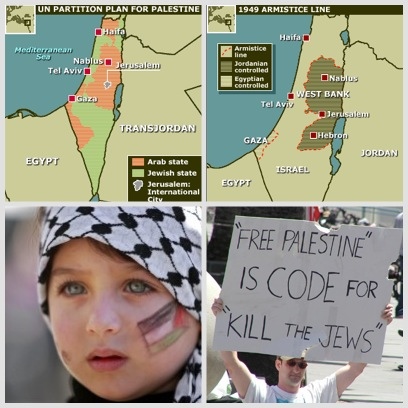
It took the generations of Palestinian leaders, and their Arab and Muslim allies, 65 years to finally see the merits in applying for Palestinian "statehood", something they could have easily done in 1948, as stipulated by the 1947 UN partition plans that ended the British mandate in Palestine (1). This vote was not even close, due in part to the early Christmas present from the Israelis, their attack on Gaza, which contributed to some of the Yes votes, and the abstention of previously No votes like the case of Germany and Australia. This last minute change of political dynamics is sure to introduce the Palestinians to a new political concept, "sometimes when you lose, you win", lets just hope that it won't take them another century to get it.

Israeli Declaration of Independence 64 years ago


Aside from being congratulated, the Palestinians should be reminded that 65 years ago, the leaders of Jewish organizations in Palestine wasted no time in declaring the state of "Israel", just 6 months after the UN resolution to partition Palestine into an Arab and Jewish states was passed on November 29, 1947. That partition resolution passed by a vote of 33 yes, 10 abstentions, and 13 No votes. The No votes didn't include he Arab states who walked out in protest, not a smart move in retrospect. The state of Israel was born on May 14, 1948, the day the British mandate in Palestine ended. Israel gained UN membership in 1949.

In the time between the partition vote in the UN and the due date for the British to relinquish power, the then Israeli leaders worked hard to ensure they had political support in the USA and Europe, including the USSR, before they declared an Independent State. They also had to prepare militarily for the predictable Palestinian and Arab reaction to a Declaration of Independence. The Israelis had the foresight to prepare for an all out war through weapon purchases (from Czechoslovakia and elsewhere), building domestic ammunition and weapon manufacturing capabilities, and by recruiting experienced Jewish WW II veterans to join their military ranks (see video link) (5).


Aside from the military preparation, the Israelis declared independence with political preplanning that ensured recognition by most countries. In case of the USA and the USSR the recognition of the state of Israel came within 48 hours of the declaration of independence. With Jewish immigrants from all walks of life with various civilian and military expertise, Israel had a distinct advantage over the Palestinians who were just emerging from the British colonization as peasants with limited depth in educated professionals. Most importantly the Israelis understood European and US politics and modern military planning, something the Palestinians and their Arab allies could not even come close to matching. The Arabs had equipments they didn't build, no combat experience to speak of, and a leadership that failed to appreciate the military and political balance of power in the world and the region.

The Palestinians fought a civil war with the Jewish citizens of Palestine from November 1947 till May of 1948. During that time there was no political effort by the Palestinians to prepare for the establishment of their own state of "Palestine". They ignored the UN and its politics and combined their ignorance of the political game with their unfounded military arrogance. They thought they could crush the Jews who were controlling less than 10% of Palestine and numbering just one third of the population (12). They never took into account that the Israelis were mostly Europeans with acquired (not inherited) superior expertise and planing capabilities, just like the British colonizers before them.

The UN partition gave ~50% of Palestine to the Jewish state, but the Israelis controlled only a small portion of the UN promised land, no pun intended. The Palestinians were emboldened by the number of Arab countries, and Arab armies, lining up to attack Israel on their behalf, which they did. Immediately after Israel declared independence, the Palestinian Arab allies attacked half-hazardly, and without any consideration for the Israeli military buildup. The Jordanian army which was one of the major armies going to war against the newly formed Jewish state was still commanded by British military officers and had a British supreme commander, John Bagot Glubb (4), need I say more?!

Arabs at the root of the stateless status of Palestinians

The Palestinian and Arab leadership continued to conspire against the common Palestinian by their sheer incompetence. In the aftermath of the war of 1948, they failed to heed the UN resolution urging them to facilitate the return of the hundreds of thousands of Palestinian refugees who fled or were driven out by war. None of the UN registered Palestinian refugees ever returned to Israel (11). The Arab leaders used the Palestinian cause as a handy punch line for decades to come, but failed to do anything to give the Palestinians legal status within their own country or in the international community.


Photo source: BBC, ashram, palstinianhistory
The Palestinians leaders themselves didn't seem to mind; No Palestinian was calling for the establishment of "Palestine" as an internationally recognized state. "Big deal" they must have thought, until someone finally realized, in 2012, that in the world of international politics being recognized as a state is a prerequisite for everything else.

The Palestinians lost the war of 1948 and with it 50% of the land assigned to them by the UN in 1947. The Arab neighbors didn't support any political moves for Palestinian independence after their joint defeat. In fact the Egyptians maintained control over Gaza, while Jordan became the sole ruler of the West Bank and East Jerusalem (until Israel pushed them out in 1967). The Palestinians were not even given autonomy by their interim Arab rulers. (Footnote: In the war of 1967, Israel was officially the aggressor, and as such the UN never recognized its occupation of the West Bank, East Jerusalem, and Gaza territories which were acquired during that war. This is why foreign embassy moves to the unified Jerusalem are a big deal, since it would legitimize the annexation of East Jerusalem by Israel (16).

Palestinian identity and statehood was such a non issue that the Arab allies didn't even bother to create a real Palestinian army during their wars with Israel . The Palestinian volunteers were left to fight as integrated units in Arab armies, or as para-military forces. The symbolism is obviously lost on the Palestinians population who still think the Arabs are on their side and truly cared for their independence.

The Arabs did lasting damage to the Palestinians by depriving them of statehood between 1947 till 2012. Their action contributed to the myth on the Israeli side that the Palestinians are part of a monolithic entity called "Arab" and that refugees have no right of return as they can easily become permanent residents of other "Arab" countries. Many of the original Palestinian refugees now dead, they leave behind three generations of stateless Palestinians who can not return to their 1948 homes, cities, and villages. The Palestinians should have demanded statehood and the return of the refugees in the early years, but their leaders didn't have the foresight to see the importance of such political action, instead they focused on waging wars they were destined to lose. Below is a declassified CIA assessment of the military balance of power in 1967.

It is worth noting that Arabs were not done "helping" the Palestinians even after their last defeat in 1973. The neighboring Arab states did all they could to pressure the Palestinians to maintain the status quo which was a non status. Palestinians within the current borders of Israel were pressured to refuse Israeli citizenship for decades, to stop the "Israelisation" of Palestine, but the Arabs failed to understand the implication of the Palestinian non-status on their civic and personal lives. Many Palestinians in the 1948 borders are now Israeli citizens and have representatives in the Israeli Knesset. They represent an enduring voice for the Palestinians as legal citizens of the modern state of Israel. They can not be deported even as conservative Israeli leaders push for emphasizing the Jewishness of the state of Israel. These Israeli Arabs still see and call themselves Palestinians.

Losing the PR war

It took the Arab neighbors of Palestine 26 years to understand that fighting Israel was like fighting a European power, and is not as easy as they thought. The Israelis not only had the European and US military and political know how, but they also made sure that news media of the world had news clips of the Israeli triumphs and viewpoints to broadcast (that's not the same as the supposed Jewish control of media), thus solidifying western, especially American, public opinion behind them (17).

Palestinians on the other hand, were only capable of inflicting political and PR damage on Palestinians. In between wars, and ever since the last war in 1973, the Palestinians managed to provide the western media with a steady stream of news clips to broadcast, the downside was that they consisted of indiscriminate terrorist attacks against the Israelis. That of course fit neatly with the image of Palestinians Israel wanted to portray in the west. As far as the Israeli leaders were concerned, the Palestinian terrorism was a gift that kept on giving for more than half a century.

Every one of the terrorist bombings helped the Israelis brand the Palestinians as barbaric aggressors and Israel as the civilized underdog defending itself. The west was seeing recurring images of Palestinian bombings against people who looked and acted like any European or American citizen. The Palestinians are still cluelessly wondering why the USA feels compelled to vote No against anything anti-Israeli, including the Palestinian statehood vote last week.

For the Palestinians to acquire some sympathy here in the US, they would have to do what the Israelis did for decades and undo the self inflicted damage to the Palestinian image. In this endeavor they may want to hire a few publicists, media experts, and lobbyists who know a little more about the western psyche than an average Palestinian on the streets of Gaza.

Photo source: Thetsablog, Nowtheendbegins.com
Domestic and Foreign sponsorship of Palestinian terrorism and its negative impact

Aside from the ill conceived and poorly conducted losing wars, the Arab and Muslim allies of Palestine managed to undermine the cause by embracing and funding the violent Palestinian "resistance". This  "resistance" included airplane hijackings(6), killing Jewish passengers of hijacked ships(7) and airplanes, kidnapping and killing Israeli athletes (8), countless bombings of buses and cafes in Israel (9), and other acts of violence against civilians. The so called "resistance" was seen by the entire civilized world as acts of terrorism; The entire world except the Palestinians that is, who took the cheering by their local allies as universal approval, and didn't see how they were irrevocably damaging their own cause.

The Arab and Muslim street was brainwashed into justifying Palestinian terrorism against Israeli civilians by showing images of Palestinian suffering and despair, which also happened to be true. Sadly the Palestinian suffering multiplied as a consequence of Palestinian terrorism but the cause-and-effect was lost on the Palestinians and their allies. The embrace of terrorism resulted in increased western political and military support for Israel over the years, while numbing Arab and Muslim psyche to the immorality of killing Jewish/Israeli civilians.

photo source: cifwatch.com, Jpost

The lasting consequence of the moral exceptions made in Palestine can be seen in other middle eastern conflicts. The average fighter in Syria today may consider killing the "enemy" civilians or prisoners of war "OK", because they "deserve" it. It doesn't take much to exchange the word "Jew" with "enemy" then apply the same moral exception. The Geneva convention has become a mere slogan in this part of the world.

The Palestinians can blame their mostly unelected leaders for their poor political standing today which leaves them celebrating even the most basic of achievements. The Palestinian leaders vary between the clueless who don't understand the impact of fighting without adherence to the expected moral standards, and those who know better but decided to throw red meat to their supporters in order to stay in power at the expense of the Palestinian cause.

It shouldn't take a genius to realize that the violence perpetrated by the Palestinians hurts the Palestinian cause in the long run, and as such, no violent act should be cause for celebration on the streets of Palestine. The Israelis may suffer in the short run but their cause becomes more "just" with every terrorist attack against Israeli civilian targets. By contrast, every time there is a Palestinian civilian casualty, Israel is able to state an intent to hit a military target or militants, which makes a huge difference in the west. The truth, or lack thereof, of these assertions is subject for another discussion.

Photo source: front page magazine
The Palestinians are subjected to propaganda that glorifies terrorist attacks as "martyrdom operations", no matter what target is hit and how many civilians are killed as a result. The Palestinians and their "allies" fail to appreciate that the universally accepted nobility of "self sacrifice" does not apply to "suicide attacks" targeting civilians.

The Palestinians are shielded by their leaders and media from the negative western reactions to terrorism, as a result, there is no negative reinforcement and no adjustments to Palestinian public opinion when it comes to violence against Israeli civilians.

Two wrongs don't make a right

Many justify the Palestinian disregard for moral prohibitions on attacking civilians and civilian targets by comparing their acts to the acts of violence committed by their enemies, or by the west in other conflicts. Aside from the many instances of Palestinian loss of life at the hand of Israelis, they point to WW II targeting of cities on both sides, including the use of nuclear weapons by the USA, and the 1940s Jewish terrorism in Palestine. Indeed, Jewish militants in Palestine were labeled "terrorists" by the British for committing acts of terrorism against the British establishment (10).


Militants then and now

Palestinians need to remind themselves that humanity is constantly evolving, rendering what was permissible in the 20th century, Impermissible in the 21st century. The other consideration is that, whether they know it or not, the Palestinians are dependent on Western governments for political support, and by extension on western public opinion. In the interest of self preservation, the Palestinians should adapt western standards in their "resistance" and denounce past and present violence against Israeli civilians under any circumstance.

What's next for Palestine?

Under the best case scenario the recent Palestinian action in the UN is a sign of an emerging Palestinian foresight that will lead to more practical steps toward statehood and comprehensive peace, based on the future, and not just the past.

If the Palestinians stop doing damage to themselves through their violent actions they actually have a great chance of success. Despite the overwhelming military superiority, Israel's position is not without weakness. The Palestinians, as the underdog in the conflict, are sure to attract the sympathy from even the American public, provided the damaging headlines stop now. The Palestinian can also count on the hard liners on the Israeli side to give them a boost through their own misguided actions, like increased settlement activities, unflattering images of Palestinian under occupation, etc.

Photo Source: Csmonitor, Peace.maripo.com, imemc.org, Strydr.com
Stop the misguided alliances with the black sheep of the world

The Palestinian leadership, and public, needs to stop being a tool in the hand of their "allies". They need to learn from their 65 years history of struggle that no one can really help the Palestinians except the Palestinians. They should remember what happened when Yasser Arafat sided with Saddam for short term promises to the Palestinian cause, like offering financing for Palestinian terrorism and firing rockets on Israel during the first gulf war. The long term consequence was increased Western animosity, the loss of financial support from the gulf states, and most importantly the arbitrary expulsion of hundreds of thousands of Palestinian refugees from Kuwait (13). The alliance with Saddam proved to be a strategic mistake by Arafat.

The Iranians alliance with Hamas and Islamic jihad may have short term benefits, such as giving the Palestinians the rocket capabilities to reach Tel Aviv, or the eventual development of Palestinian made SAMs, but they should consider the long term disadvantages of this alliance. For starters, Hamas can not expect US recognition while they ally themselves with its enemy, Iran. The Palestinians are less likely to complete a peace deal with Israel because the alliance with Iran is conditional on continued hostilities towards Israel. At the end of the day, the Palestinian are the ones who suffer from the Iranian doctrine of violent resistance at all cost to the Palestinians.

The only interest Tehran has in Palestine is to use the Palestinians as a thorn in the back of its it's enemy Israel. In fact it is not in Iran's interest for the Palestinian issue to be resolved at this point. Tehran is only too happy to remind the Palestinians of their suffering and incite them to violence which ultimately damages their cause. If the Iranian regime is interested in fighting Israel it should be told to go ahead and declare war, not use the Palestinians as proxy worriers at the expense of losing more of their lands, lives, and freedoms.

All the Arab leaders who champion the Palestinian cause have also proven unreliable and will not be of true benefit to Palestine when push comes to shove. The examples of this facts are too numerous to include here.

The most important country in the final solution of the Palestinian issue is the USA and the Palestinians should find a way to build relations and stop presenting themselves as a terrorist threat.

Financial independence

The Palestinians may come to understand the need to emphasize financial independence from both the west, and the Arab and Islamic world, in order to stop the undue political pressure on them.

There is no reason, for instance, for the Palestinians to have their taxes collected by the Israelis at the border crossings, as is the case now. Granted, they would lose 50% of the money to Palestinian corruption if they collect the taxes themselves, but it would still be politically worth it. A tax based economy might be a great place to start, as they have no natural resources of their own, save perhaps some future gas reserves in the Mediterranean off the shores of Gaza.

Culture not war

The Palestinians are yet to make any serious effort to expose the west to the Palestine cause through culture and art.

Consider this, almost every Palestinian refugee family outside the 1948 borders of Palestine has a large front door key to the house they left behind in the 1948 and 1967 wars, yet there is not a single museum or work or art in the west that uses this uniquely Palestinian theme. The Palestinians would be surprised to find that they could do whatever they want, culturally, on private property in the USA, or any other western country. The world needs to know more about Palestine, beyond what they see on the news, which is often just senseless violence and anger.

Photo source:Aljazeera, Israelmatzav.com, sonabangladesh.com, ronitlentin.net

Stop denying the Holocaust

The Palestinian may feel compelled to deny the holocaust because the Israelis are their enemies, but they really don't benefit from that denial. In fact the holocaust, as a symbol of Jewish suffering, can provide the Palestinians with a bridge to address their own suffering with the average Israelis. Granted, the Palestinians are not being gassed and burnt, but still they can make an argument that they have somethings in common with the ancestors of present day Israelis, such as the ghettos, the fences, the security walls, the check points etc. Instead of denying the holocaust, the Palestinians should loud it and ask the Israelis not to subject them to what their ancestors went through.

Photo source: Holocaust-forum.blogspot, isurgived.org,Kyivpost.com
una-okc.org
Absent terrorism and antisemitism, the Palestinians have a great chance of appealing to the better nature of their fellow humans on the other side of the separation wall. The image of Palestinians can be changed in Israel too, from anti-Semitic terrorists to fellow human beings who happen to be suffering for the past 65 years, just like the Jews suffered in Nazi Germany. The world stood silent when the holocaust happened, the Israelis know that too well, and they should be the first nation to care about the Palestinians. "Never again" in not meant to be exclusive to Jews. 

Instead of firing in the air during demonstrations, the Palestinians may want to consider using symbolic gestures that can appeal to both societies, like using the tag shown below on their clothes, just like the German Jews were made to wear an identifying label on their cloths.

Original art made for this article by "SI", a talented young Iraqi refugee from NYC. Can be reproduced with mention of the source.

To say that this subject is controversial is probably an understatement, but we have to remind ourselves that sometimes the only way forward is to start fresh despite the bloody past.

I can't help but imagine a rosy future for the region as a whole, with nations so interconnected by commerce and culture that borders become administrative lines on the map.

Most Israelis must know by now that a settlement that gives the Palestinians the West Bank, East Jerusalem and Gaza is going to be acceptable to most Palestinians. The millions of refugees and their offsprings are likely to be left in limbo or housed in high-rises in the new Palestinian state, but no one can turn back time to fix that problem. The defensible Israeli border and enduring security will be that which is based on justice and not strategic hills; there should be no excuse for land grabs in the name of short term and short lived security. President Eisenhower once said "The Peace we seek and need means much more than mere absence of war, it means the acceptance of law and the fostering of justice".

Photo source: BBC, southernminn.com, Akiva Eldar
The Israelis need to understand that the world is watching, and if the Palestinians drop the violence they will likely have the majority of the world on their side, just like in the UN vote last week. Today's summoning of Israeli ambassadors in London, Paris, and Stockholm to complain about the new settlement building in "Palestine" is a sign of things to come (15), unless of course, the Palestinians take Israel off the hook by blowing up another cafe or firing more rockets. The Slate magazine (USA) had an article today about Israel which makes for interesting reading. It was titled: Get Real, Israel! Want to stop losing friends in the United Nations? Stop insulting our intelligence (14).

Palestinian leaders at every level should ask themselves which is more brave, to blow up a bus full of civilians and hurt the Palestinian cause, or help the cause by taking a controversial stance against indiscriminate violence and tell the people what they need to hear? Obviously such individuals risk being labeled traitors and marked for assassination by their fellow countrymen. It's easy for me to say, but I think that would be better than being killed by a drone strike for no apparent purpose except to send a message.

Let's hope that such brave Palestinian are as readily available as suicide bombers.


Photo source:vetranstoday.com, theuglytruth.worldpress, life

References: